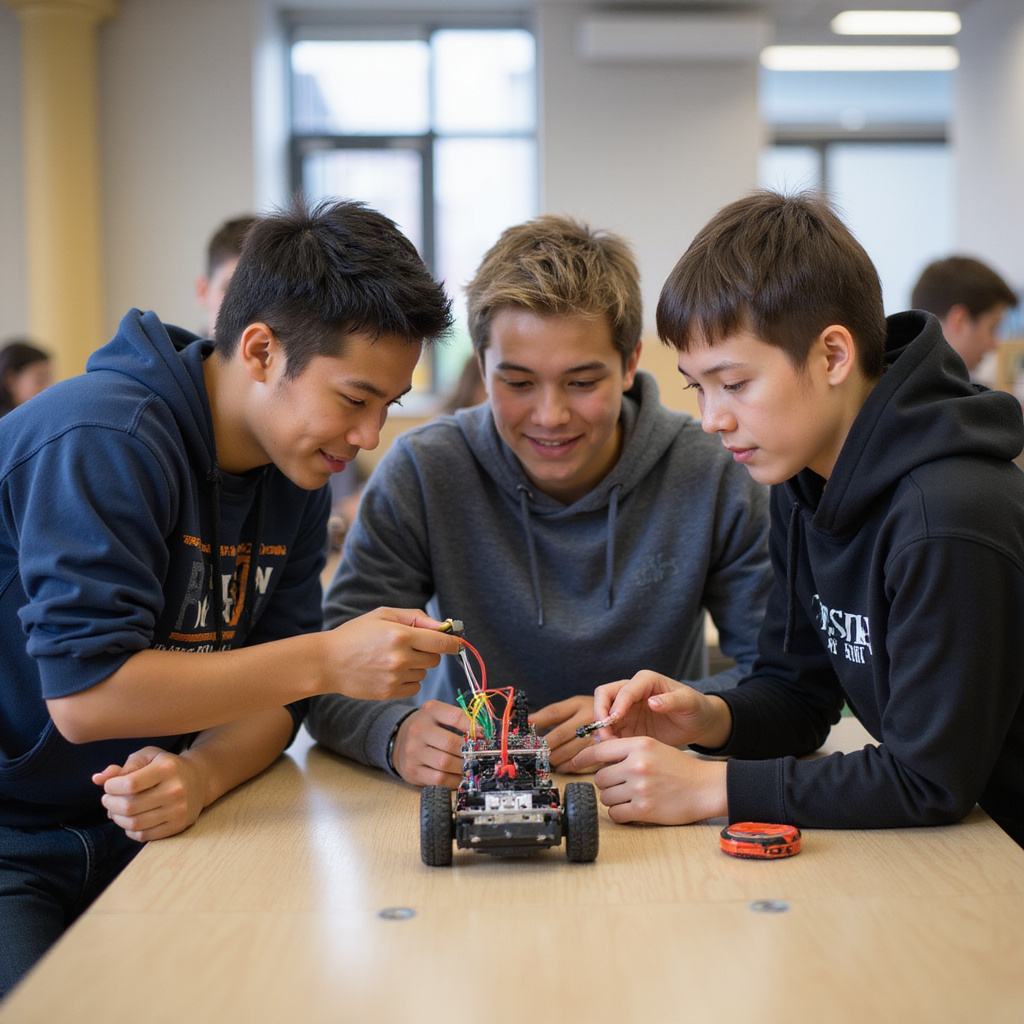
Free STEM programs for high school students remove financial barriers that prevent many teens from accessing advanced learning opportunities. These programs introduce students to science, technology, engineering, and math through structured experiences without participation fees. Access to free programs helps districts support equity, broaden participation in technical fields, and encourage students who may not otherwise explore STEM pathways.
School leaders implement free STEM programs to expand enrichment opportunities beyond standard coursework. With guidance from AGC Education, districts can design cost accessible programs that include curriculum, educator training, and classroom ready resources. AGC Education supports schools in creating programs that meet budget limits while still delivering strong educational outcomes.
Free STEM programs for high school students help close opportunity gaps. Students from underserved communities often lack access to private camps, tutoring, or enrichment programs. Free district led programs ensure all students can participate regardless of financial background. This improves representation in advanced STEM courses and career pathways.
Administrators value free programs because they strengthen community trust and improve student engagement. Students are more likely to participate when programs are accessible and aligned with their interests. With planning support from AGC Education, districts can structure free programs that align with workforce readiness goals and academic standards.
Schools can provide free STEM programs through grant funding, district budgets, partnerships, and community sponsorships. Programs should include clear learning objectives, hands on activities, and trained instructors. Structured curriculum ensures consistency and quality even when programs scale across multiple campuses.
Teacher preparation is critical. Professional development helps educators deliver engaging instruction with limited resources. Schools benefit from program kits that include lesson plans, activity guides, and assessment tools. AGC Education offers turnkey program models that simplify setup and help districts launch free STEM programs efficiently.
Community partnerships increase sustainability. Collaborations with local colleges, nonprofits, and employers can provide guest speakers, mentorship, and resources that strengthen program impact.
Free STEM programs for high school students increase participation by removing cost as a barrier. Students gain confidence through hands on projects and collaborative learning. Exposure to technical subjects helps students discover interests that influence course selection and career planning.
Schools benefit from stronger enrollment in advanced STEM classes after students participate in free programs. Districts also see improved engagement and higher retention in STEM pathways when students have early access to enrichment opportunities.
Free STEM Programs for High School Students: How to Find, Evaluate, and Implement Them
Free STEM programs for high school students can transform your campus at no cost. The strongest summer programs give teens real research experience, mentored projects, and engineering design that connects math and science to real world problems. Focus on clear eligibility criteria, application deadlines, cohort size, and strong mentorship. Prioritize programs where students learn, create, and present outcomes. Launch a small pilot, support weekly, and start your shortlist now. Request a vetted list and evaluation checklist.
What Are Free STEM Programs for High School Students and Why Do They Matter?
Free STEM programs for high school students are no cost learning experiences that give teens real practice in science, technology, engineering, and math through hands on activities, research projects, coding, robotics, or engineering design challenges. Some programs run during the summer as camps or research programs, while others operate virtually, after school, or on weekends.
These programs matter because they remove financial barriers. When programs are cost free, more students can participate, especially students from underrepresented backgrounds and first generation college hopefuls. Educators benefit from higher engagement without adding full courses. Students learn by analyzing data, building prototypes, collaborating in teams, and presenting findings similar to real research environments.
Free STEM programs today include university hosted programs, nonprofit initiatives, and grant funded research internships. Many pair high school juniors and seniors with mentors for lab based or remote research. Others focus on computer science, artificial intelligence, engineering design, or career connected internships. For districts, the most valuable programs provide structured learning with tangible outcomes such as projects, research posters, portfolios, or documented mentorship hours.
Defining Free STEM Programs for High School Students in Today’s Learning Ecosystem
Free STEM programs operate across universities, nonprofits, and online platforms. These programs may be fully funded, tuition free, or no cost virtual learning with certificates and mentorship. Strong programs emphasize structured learning, measurable outcomes, and authentic problem solving.
Key Benefits of Free STEM Programs for Student Engagement, Equity, and Outcomes
Students gain confidence through hands on learning, research exposure, and collaboration. These programs improve access for underrepresented learners and strengthen college readiness, critical thinking, and career exploration.
How Free STEM Programs Support Curriculum, CTE Pathways, and Graduation Goals
Free STEM programs reinforce math, science, and CTE coursework. They help students meet graduation requirements while building portfolios, completing research projects, and exploring career pathways in engineering and technology.
Common Myths About Free STEM Opportunities for High School Students
Free programs are not low quality. Many are university backed, grant funded, and highly selective. They often deliver rigorous content with strong mentorship and real academic outcomes.
How Free STEM Programs Align With College, Career, and Workforce Readiness
These programs expose students to research methods, coding, data analysis, and professional collaboration. Students gain experiences that strengthen college applications and workforce skills.
Types of Free STEM Programs for High School Students Schools Can Leverage
Schools can leverage after school clubs, virtual academies, research internships, competitions, and summer programs. The strongest approach is to stack experiences across the year to keep students engaged and build measurable outcomes.
After School and Weekend Free STEM Programs for High School Students
Coding clubs, robotics teams, and math circles offer low lift engagement without schedule changes. Short cycles allow students to complete projects and present results.
Credit Bearing and Dual Enrollment STEM Courses at No Cost to Students
Some districts partner with colleges to provide free credit bearing STEM courses that support graduation and college readiness.
Virtual and Hybrid Free STEM Programs and Online Academies
Virtual programs remove transportation barriers and offer mentorship in artificial intelligence, data science, and biomedical research.
Project Based Learning, Maker, and Design Challenges as Free STEM Experiences
Maker challenges and design projects allow students to apply engineering design through hands on experimentation and collaboration.
Competitions, Hackathons, and Robotics as Free STEM Enrichment Programs
Competitions and hackathons build teamwork, technical skills, and problem solving under real world constraints.
How to Evaluate Free STEM Programs for High School Students for Quality and Fit
Define grade levels, delivery format, and desired outcomes. Confirm safety policies, technical requirements, and application deadlines. Programs should align with curriculum standards and provide structured mentorship.
What to Look For in Curriculum Alignment, Rigor, and STEM Standards Coverage
Programs should map to NGSS and state standards, include clear learning objectives, and provide structured assessments. Strong programs include real research projects, datasets, and design challenges.
Evaluating Student Safety, Data Privacy, and Accessibility in Free STEM Programs
Confirm lab safety protocols, student data protection policies, and accessibility supports for diverse learners.
Assessing E E A T in STEM Providers
Evaluate provider expertise, real world experience, institutional credibility, and documented student outcomes.
How to Review Outcomes Data, Case Studies, and Testimonials for STEM Programs
Look for documented impact, student projects, completion rates, and post program outcomes.
Questions to Ask Vendors and Partners Offering Free STEM Programs
Ask about mentorship quality, staffing expectations, technology requirements, and student support structures.
Examples of National Free STEM Programs for High School Students
National programs offer research projects, engineering design, coding, and data science mentorship. Many provide fully funded summer research experiences and virtual lab programs.
Free STEM Summer Programs and Camps for High School Students
These programs provide immersive learning experiences with faculty mentors and research projects.
Nonprofit and University Led Free STEM Initiatives for Teens
University and nonprofit programs emphasize research exposure, mentorship, and college readiness.
Industry Sponsored STEM Challenges, Badges, and Micro Credentials
Industry partnerships offer credentials tied to workforce skills and applied problem solving.
Online Coding, Robotics, and Engineering Programs That Are Free for Schools
Online platforms scale access to coding and robotics without transportation barriers.
Open Educational Resources and Free STEM Curriculum Libraries
Open libraries provide ready to use lesson plans and project guides aligned to standards.
Integrating Free STEM Programs for High School Students Into Your School or District Plan
Free STEM programs succeed when integrated into district strategy. Define goals, map opportunities by grade level, and align scheduling to protect project time.
Aligning Free STEM Programs With Your Strategic Plan and Portrait of a Graduate
Programs should support graduation outcomes, workforce readiness, and student engagement goals.
Scheduling Free STEM Opportunities Within the Master Schedule and Calendar
Balance in day instruction with after school and summer programs to maximize participation.
Balancing Core Requirements With STEM Electives and Enrichment Time
Protect consistent time blocks so students can complete research and design projects.
Building Cross Department Collaboration Around STEM Programs
Coordinate teachers, counselors, and administrators to support program implementation.
Communicating Free STEM Opportunities to Students and Families
Share clear timelines, eligibility criteria, and application deadlines.
Tracking Participation, Equity, and Impact of Free STEM Programs Over Time
Use participation data, student outcomes, and equity metrics to guide improvement.
Leveraging Technology and Makerspaces to Extend Free STEM Programs
Makerspaces enable students to prototype, test ideas, and practice engineering design in real classroom environments.
Using 3D Printers, Laser Engravers, and Fabrication Tools in Free STEM Projects
Fabrication tools support hands on learning in engineering, physics, and design.
How Poster Printers and Large Format Printing Support STEM Communication
Large format printing helps students present research findings and design work.
Incorporating Robotics, Coding, and Engineering Kits Into Free STEM Programs
Robotics and coding kits support repeatable, standards aligned instruction.
Creating Sustainable Makerspaces That Anchor Free STEM Opportunities
Sustainable spaces require clear goals, training, and equipment planning.
Managing Supplies, Consumables, and Maintenance for STEM Technology
Budget planning ensures long term program stability and access.
Funding, Partnerships, and Sustainability for Free STEM Programs
Sustainable programs rely on blended funding, partnerships, and documented outcomes. Grants should support growth, not replace core funding.
How to Combine Free STEM Programs With Grants and Existing Budgets
Use grants for equipment and enrichment while districts fund staffing and operations.
Building Partnerships With Higher Education, Nonprofits, and Industry
Partners provide mentorship, labs, and real world project opportunities.
Engaging Community Mentors and Volunteers in STEM Learning
Community mentors strengthen real world relevance and student motivation.
Designing a Multi Year Roadmap for STEM Program Sustainability
Plan for leadership changes and long term funding stability.
Setting Measurable Goals and Milestones for STEM Expansion
Track participation, project completion, and academic outcomes.
Documenting and Sharing Success Stories to Secure Ongoing Support
Share student projects and outcomes to protect funding.
Professional Development to Support Free STEM Programs for High School Students
Teacher training ensures programs launch successfully and sustain impact. PD builds confidence with tools, labs, and project facilitation.
Why Educator Training Determines the Success of Free STEM Initiatives
Well trained teachers maintain momentum and reduce implementation friction.
Designing PD That Builds Teacher Confidence With STEM Technology and Tools
PD should focus on practical classroom workflows and troubleshooting.
Onboarding New Teachers Into Existing Free STEM Programs
New teachers need structured onboarding to maintain program quality.
Leveraging Online Courses, Academies, and Micro Credentials for STEM PD
Micro credentials offer flexible skill development for educators.
Creating Teacher Leader and Student Ambassador Roles in STEM
Leadership roles build internal capacity and program continuity.
How AGC Education Supports Schools Implementing Free STEM Programs
AGC Education supports implementation with planning, training, equipment alignment, and on site coaching. Schools gain structured support that fits real schedules and classroom constraints.
Connecting Free STEM Programs With the Right Equipment and Tools
Proper equipment ensures lessons work the first time.
EmpowR Academy and Educator Designed STEM Professional Development
Educator led PD provides classroom ready strategies and pacing guidance.
On Site Implementation, Support, and Success Coaching
On site support reduces friction and accelerates adoption.
Student Certifications and Real World STEM Skill Building Opportunities
Certifications validate student skills and strengthen college applications.
Next Steps for Schools Exploring Free STEM Programs With AGC Education
Start with a planning call to align goals, resources, and timelines.
Questions to Bring to Your First Planning Conversation
Prepare goals, constraints, staffing availability, and timelines.
Checklist: Information to Gather Before Meeting With a STEM Partner
Gather student counts, grade levels, tech access, staffing capacity, and scheduling constraints.
nasa mites science math behavioural science nasa free after school stem programs for high school students free after school stem programs for high school students immersion science internships santa clara university research math circle math math science nasa science summer camp neurodiversity summer camps research science stem internships data science massachusetts institute of technology summer camps rsi neurodiversity nasa researcher computer science science internship science earth science rsi mathematics computer science science free after school stem programs for high school students engineering science free after school stem programs for high school students math free after school stem programs for high school students rsi engineering free engineering programs for high school students science science research nasa science google summer of code math free after school stem programs for high school students computer science internships massachusetts institute of technology science and engineering harvard summer school science lawrence hall of science nasa math science summer camps science science engineering engineering math science math stem science math free after school stem programs for high school students mathematics science nasa science summer camps research clinical neuroscience internships boston university rsi math mites distance learning nasa science rsi research free after school stem programs for high school students internships math science nasa science nasa seminar nasa science science massachusetts institute of technology science nasa