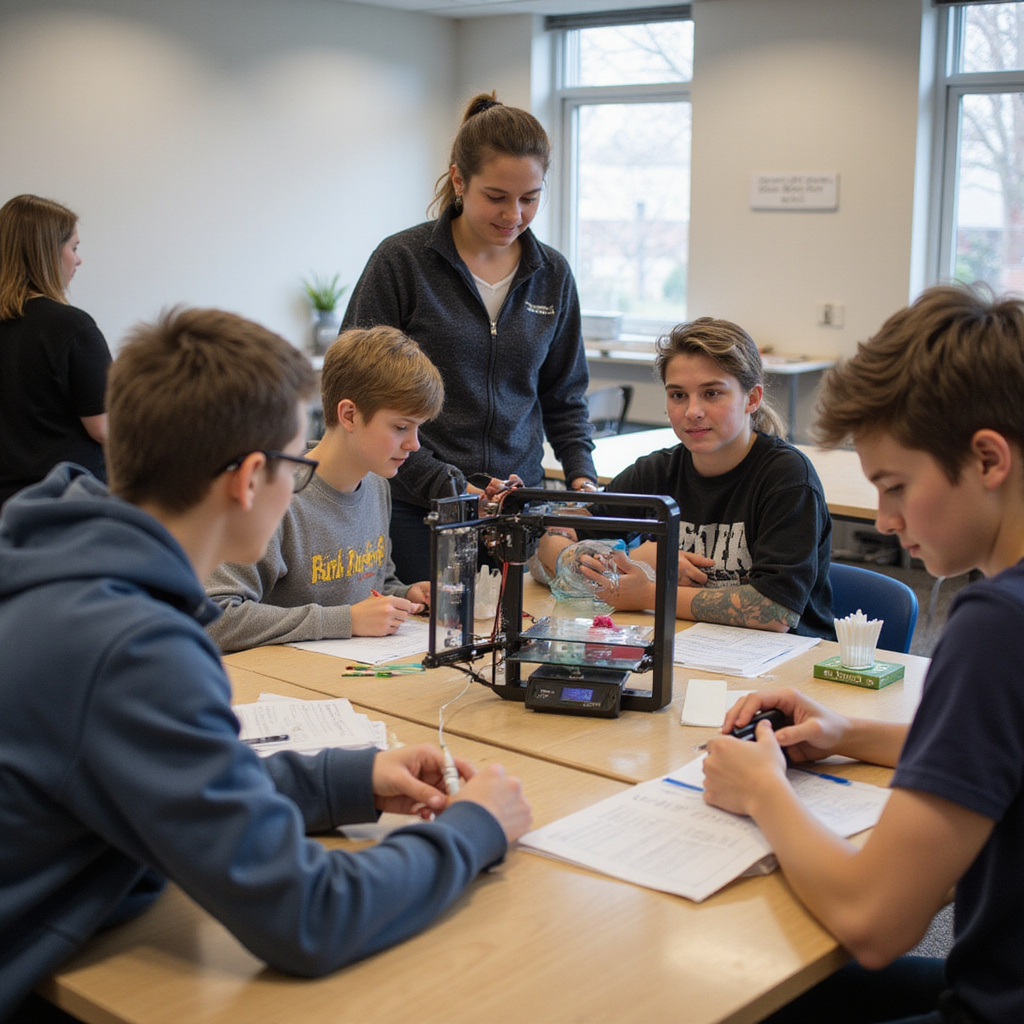
A 3D printer classroom creates an active learning environment where students move beyond screens and worksheets to build real objects. Instead of only consuming information, students design solutions, test ideas, and refine physical models. This hands-on process strengthens problem solving, creativity, and technical skills across science, engineering, art, and design subjects.
District leaders adopt the 3D printer classroom model to modernize instruction and align learning with real world applications. With support from AGC Education, schools can implement classroom ready 3D printing environments that include curriculum guidance, teacher training, and reliable technology. AGC Education helps districts create sustainable classroom programs that are easy to manage and scale.
A 3D printer classroom shifts instruction from lecture based delivery to project driven learning. Students explore concepts by building models, testing prototypes, and revising designs based on feedback. This approach promotes deeper understanding because students connect theory to physical outcomes.
Teachers gain flexible tools to support multiple learning styles. Visual learners benefit from tangible models, while kinesthetic learners gain through hands-on building. Administrators see improved engagement and stronger collaboration across departments when 3D printing supports cross curricular projects. With guidance from AGC Education, teachers receive lesson frameworks that integrate printing into existing standards.
An effective 3D printer classroom includes safe equipment, clear workflows, and teacher support. Enclosed printers, simple controls, and quiet operation fit daily classroom routines. Print queues and scheduling help manage multiple student projects without disrupting instruction.
Professional development ensures teachers can use the technology confidently. Schools benefit from onboarding, lesson plans, and troubleshooting support. AGC Education provides structured implementation models that reduce setup time and ensure consistent classroom use.
Equity matters in classroom design. Shared access, rotating project schedules, and inclusive lesson planning ensure all students benefit from hands-on learning, not just advanced electives.
3D printer classrooms increase engagement by giving students ownership over their learning. Students see their ideas become real, which builds confidence and persistence. Project based learning improves communication skills as students present designs and collaborate on solutions.
Schools benefit from stronger participation in STEM pathways and increased interest in design and engineering careers. Students gain practical experience that supports portfolios, competitions, and advanced coursework.
3D Printer Classroom: How to Bring Real World STEM Learning to Life in K 12
A 3D printer classroom turns abstract STEM into real world learning. Students can print math models, science tools, and 3D objects so engagement and understanding improve. A classroom 3D printer supports quick projects and deeper builds using tools like Tinkercad and Cura. Students learn modeling, measurement, iteration, and design thinking through hands on work. Request a quote to build a safe, affordable classroom 3D printing plan.
What Is a 3D Printer Classroom and Why It Matters for K 12 Learning
A 3D printer classroom is a learning space where students design, model, and print physical objects to support curriculum goals. It can live in a makerspace, library corner, STEM lab, or mobile cart. Students move from theory to application, improving engagement, retention, and collaboration across subjects like math, science, art, and CTE.
How a 3D Printer Classroom Transforms Hands On STEM and Project Based Learning
A 3D printer classroom turns lessons into experiences. Students move from passive learning to active building, which increases curiosity and ownership of projects. By designing and printing solutions, learners practice problem solving, testing, and revision. Teachers gain flexible project based learning activities that fit STEM goals while encouraging teamwork, creativity, and communication skills.
From Abstract Concepts to Tangible Models: Making Math and Science Visible
Printing physical models helps students visualize complex ideas. Fractions become measured parts, geometry becomes 3D shapes, and science concepts become manipulatives. Students compare scale, test measurements, and correct errors. This hands on approach improves comprehension, supports diverse learning styles, and builds confidence through visible progress students can hold and explain.
Boosting Student Engagement, Creativity, and Problem Solving With 3D Printing Projects
3D printing projects spark curiosity and motivation. Students design solutions, test prototypes, and refine ideas when prints fail. This process teaches resilience and creative problem solving. Learners collaborate, share feedback, and improve designs. Engagement increases because students see real outcomes from effort, making learning meaningful and memorable across grade levels.
Key Components of a Modern 3D Printer Classroom Setup
A modern classroom setup includes reliable printers, student friendly modeling software, safe materials, and clear workflows. Teachers benefit from simple file submission processes and predictable print schedules. Proper placement, supervision, and ventilation support safety. With the right setup, printing becomes routine, accessible, and easy to integrate into daily lessons.
3D Printers, Software, and Materials Every School Makerspace Needs
Schools need enclosed printers for safety, PLA filament for ease of use, and durable tools for part removal. Software such as Tinkercad and Cura simplifies modeling and slicing. Storage for filament, labels for prints, and basic maintenance tools keep workflows organized. This setup reduces downtime and keeps projects moving smoothly for classrooms.
Safety, Supervision, and Classroom Management for 3D Printing
Safety starts with clear rules, supervised operation, and proper printer placement. Teachers should establish handling procedures for hot components and moving parts. Ventilation and material guidelines protect indoor air quality. With simple classroom management systems, 3D printing becomes safer than many lab activities while maintaining a productive learning environment.
How a 3D Printer Classroom Supports Standards Aligned Curriculum
3D printing aligns with STEM, CTE, and design standards by connecting concepts to real world applications. Students practice measurement, modeling, and engineering design processes. Projects map directly to learning objectives, supporting assessment and documentation of mastery. This alignment helps schools justify investment and scale programs across classrooms and grade levels.
Aligning 3D Printing Projects to STEM, CTE, and Design Standards
Teachers can map projects to standards by defining learning outcomes before printing begins. Geometry models align with math benchmarks, prototypes support engineering standards, and design projects reinforce CTE pathways. Clear rubrics help assess creativity, function, and reflection. This ensures 3D printing supports curriculum goals and measurable learning outcomes.
Planning a 3D Printer Classroom: Strategy, Budget, and Infrastructure
A successful classroom starts with clear goals, workflows, and infrastructure planning. Schools should define what students will build, where printers will live, and how files move from design to print. Budget for printers, materials, maintenance, and training. Planning ahead prevents downtime and ensures consistent, reliable access for students.
How to Choose the Right 3D Printers for Classroom and Makerspace Use
Choosing printers depends on class size, build volume, speed, and reliability. Enclosed printers with easy maintenance reduce classroom disruption. Consider software compatibility, support resources, and warranty coverage. The right printer balances cost with durability, minimizing troubleshooting while supporting frequent student use throughout the school year.
Comparing Classroom 3D Printer Features, Reliability, and Total Cost of Ownership
Total cost includes the printer, filament, replacement parts, and teacher time. Reliable machines reduce lost instructional time. Look for printers with simple calibration, consistent print quality, and strong vendor support. A slightly higher upfront cost can reduce long term expenses and frustration across multiple classrooms and school years.
Questions to Ask Vendors Before Buying 3D Printers for Schools
Ask vendors about classroom case studies, warranty terms, replacement parts availability, and training resources. Confirm compatibility with student devices and networks. Request sample lesson plans and onboarding support. Clear answers help schools choose equipment that fits real classroom needs and avoids hidden costs after purchase.
IT, Network, and Data Considerations for a Secure 3D Printer Classroom
Printers should integrate with school networks securely. Confirm device compatibility with Chromebooks and student accounts. Establish file approval workflows and access permissions. IT teams should review firmware updates and data policies. Planning network requirements early prevents connectivity issues that delay projects and frustrate teachers and students.
Budgeting for a Scalable 3D Printer Classroom Program
Scalable programs plan for growth. Budget for multiple printers as demand increases. Include consumables, maintenance time, and replacement cycles. Schools should plan phased expansion, starting with pilot classrooms before rolling out district wide. Predictable budgeting supports long term sustainability and consistent access across grade levels.
Factoring In Consumables, Maintenance, and Replacement Cycles
Consumables include filament, adhesives, and tools. Maintenance includes cleaning, nozzle replacement, and calibration. Replacement cycles account for wear over time. Planning these costs avoids surprise budget gaps. Schools that track usage can forecast supply needs accurately and keep printers running without interruption.
Designing Equitable Access to 3D Printing Across Classrooms and Grade Levels
Equitable access ensures all students benefit. Use shared makerspaces, mobile carts, or scheduled access for multiple classes. Train multiple teachers to avoid single points of failure. Clear scheduling systems help distribute printer time fairly, supporting consistent learning opportunities across grades and programs.
Implementing a 3D Printer Classroom With Training, Support, and Curriculum Integration
Implementation succeeds when 3D printing is treated as a program, not a gadget. Schools should establish routines, training, and curriculum connections. Clear workflows, safety protocols, and lesson alignment help teachers adopt printing quickly. Ongoing support ensures consistent usage and meaningful student outcomes.
Teacher Training and Professional Development for 3D Printer Classroom Success
Teachers need hands on training to feel confident. Professional development should cover modeling tools, slicing software, print troubleshooting, and classroom management. Short workshops and ongoing coaching help educators integrate printing into lessons without feeling overwhelmed by technical details.
Onboarding Educators With EmpowR Academy and Ongoing Coaching
Structured onboarding accelerates adoption. Educators benefit from guided tutorials, sample lessons, and access to coaching. Ongoing support helps teachers troubleshoot issues and expand project complexity over time. This builds confidence and ensures printers remain active learning tools, not unused equipment.
Student Certifications, Career Pathways, and Real World Skills With 3D Printing
3D printing introduces students to career pathways in engineering, design, and manufacturing. Certifications and skill progression help learners build portfolios. Students gain transferable skills like CAD modeling, problem solving, and collaboration, preparing them for future education and workforce opportunities.
Building a Progression From Introductory 3D Design to Advanced Fabrication
Start with simple modeling projects and progress to functional prototypes. Students learn design fundamentals before exploring materials, tolerances, and assembly. A clear progression supports skill development and keeps learners challenged as they advance. This structure builds confidence and competence across grade levels.
Showcasing Student Work and Measuring Impact of Your 3D Printer Classroom
Showcase projects through exhibitions, digital portfolios, and presentations. Measuring impact includes tracking engagement, skill growth, and curriculum alignment. Sharing outcomes builds support among administrators and families while motivating students. Visible results help justify continued investment and program expansion.
How AGC Education Supports Every Stage of Your 3D Printer Classroom Journey
Support partners help schools plan, launch, and scale programs. Services include equipment guidance, training, curriculum mapping, and technical support. With structured support, schools avoid common pitfalls and achieve consistent outcomes across classrooms and grade levels.
Implementation Support, Success Teams, and Ongoing Technical Help
Dedicated support teams assist with setup, troubleshooting, and program growth. Ongoing technical help minimizes downtime and keeps teachers focused on instruction. Access to success teams ensures continuous improvement, helping schools refine workflows and maximize learning impact over time.
art stem 3d printer education education education 3d printer for classrooms education stem learning education 3d printing 3d printers 3d printers spools learning 3d printer curriculum art teacher 3d printing education 3d printing education bar charts cart education 3d printing 3d printers 3d printer curriculum spools learning learning education robotics design learning 3d printing earth 3d printing 3d printers education arts integration 3d printing stem worksheet stem 3d printing learning 3d printers machine learning 3d printer classroom learning 3d printing stem 3d printers education 3d printers learning robotics cart education arts integration stem 3d printer arts integration stem learning worksheet learning math spools 3d printing robotics cart 3d printing machine stem education spool learning 3d printers arts integration 3d printers teacher 3d printer 3d printer 3d printing 3d printers cart 3d printer learning 3d printing 3d printers 3d printers 3d printers 3d printing 3d printers 3d printing stem 3d printer 3d printing curriculum makerspace 3d printing stem 3d printer 3d printing science tools metal robotics art education 3d printing stem bar charts 3d printer software 3d printers stem tools learning 3d printers 3d printer learning learning 3d printer teacher 3d printer 3d printer learning teachers stem education 3d printing 3d printing teacher design 3d printer online courses teacher