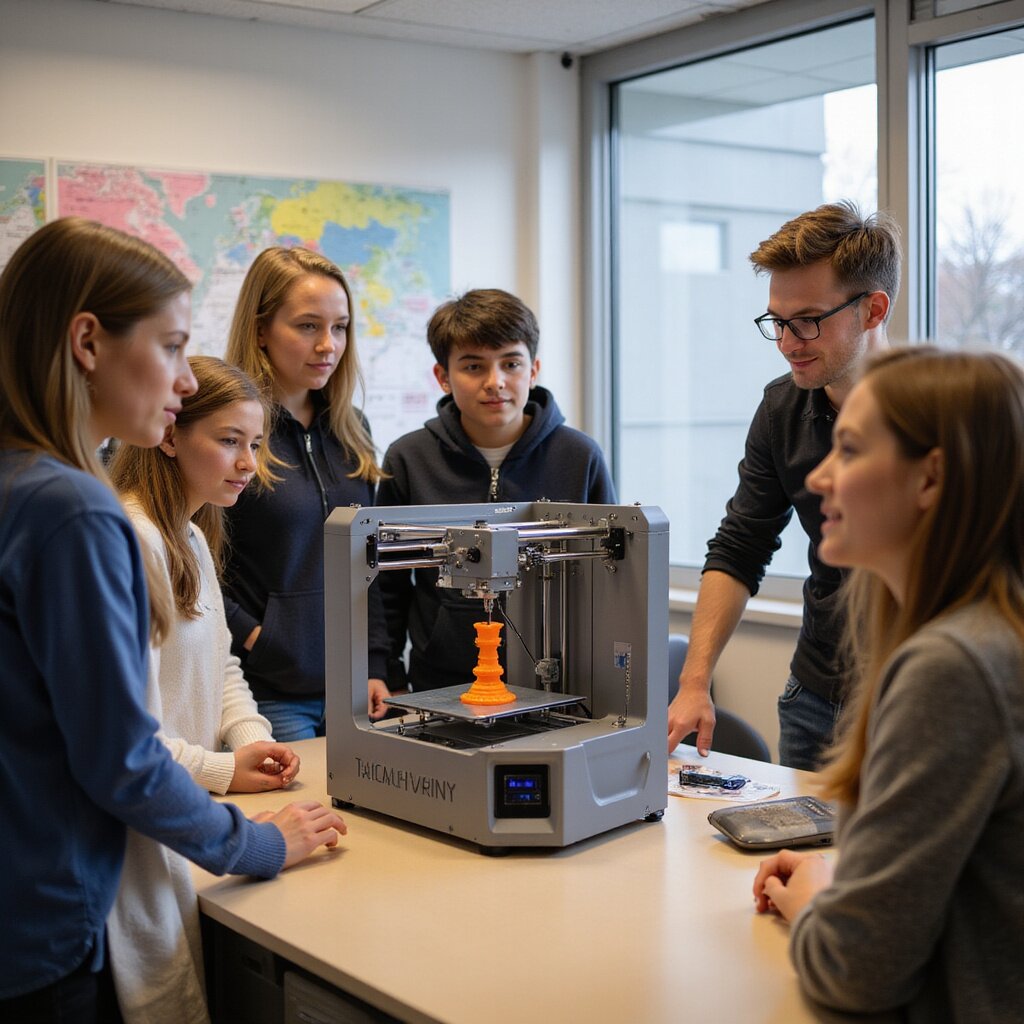
Not every printer is designed for daily classroom use. A true 3D printer in the classroom prioritizes safety, reliability, and ease of use. Look for enclosed designs, automatic calibration, simple filament loading, and quiet operation to fit everyday instruction.
Support and training accelerate success. The best education providers include onboarding, lesson plans, and professional development so teachers can launch quickly. Centralized management tools help IT teams manage multiple printers across classrooms with minimal overhead. AGC Education offers a turnkey approach that includes planning, deployment, training, and ongoing support to ensure long term success.
Scalability protects your investment. Choose platforms that grow from one classroom to many with shared student libraries, user controls, and fleet monitoring. This makes district wide expansion smooth and cost effective.
A 3D printer in the classroom increases engagement because students see their designs become real. This boosts motivation and ownership of learning. Students practice design thinking, iteration, and collaboration. These skills build confidence and mirror real world problem solving.
Hands on learning supports diverse learners. Visual and kinesthetic students benefit from building models. Students who struggle with lecture based instruction often thrive with project based learning, improving equity in STEM participation.
3D Printer in the Classroom: How to Implement, Fund, and Scale Impact Across Your District
A 3D printer in the classroom stops being a gadget when teachers solve real problems with 3D printing. Geometry classes print manipulatives, CTE programs build functional parts, and labs prototype 3D models from CAD software. Avoid idle devices with a clear classroom setup, access rules, and lesson plans aligned to curriculum. Start with one classroom printer, then scale across schools. Funding often blends grants and STEM budgets. Partner with us and request a quote to implement districtwide.
What a 3D Printer in the Classroom Really Does for Student Learning and Engagement
A 3D printer in the classroom turns learning into hands on exploration. Students design models and watch ideas become physical objects, reinforcing cause and effect. This approach increases engagement for learners who struggle with traditional worksheets. Teachers gain practical tools to meet standards through prototyping, iteration, and real world problem solving supported by simple classroom workflows.
How a 3D Printer in the Classroom Supports STEM, CTE, and Cross Curricular Learning
3D printing supports science, math, engineering, art, and career technical education by connecting digital design to physical outcomes. Students apply measurement, geometry, and design thinking while building real objects. Projects reinforce collaboration, communication, and problem solving skills that align with academic standards and workforce pathways. Cross curricular lessons make learning relevant and memorable.
From Concept to Prototype: Turning Abstract Standards into Tangible Learning With 3D Printing
When students move from concept to prototype, standards become visible. Learners design parts in CAD, prepare files in slicing software, and analyze print results. Each step builds critical thinking and persistence. Students see how design choices affect strength and accuracy, which deepens understanding of engineering concepts and improves confidence through iteration and refinement.
Real Classroom Examples of 3D Printing Projects That Build Problem Solving and Creativity
Teachers use 3D printing to create science models, history artifacts, and engineering challenges. Students design assistive tools, build scale models, and prototype classroom solutions. These projects promote creativity, teamwork, and ownership of learning. Real examples help educators visualize how printing fits daily instruction and meets diverse learning needs.
Sample 3D Printing Projects for Elementary, Middle, and High School Classrooms
Elementary students print geometric shapes and simple tools. Middle school classes design bridges and science models. High school students prototype functional parts and engineering solutions. Projects scale by grade level, teaching design basics early and advancing toward tolerances, testing, and real world problem solving as students progress.
Is a 3D Printer in the Classroom Worth It? Outcomes, Skills, and ROI for K12 Districts
A 3D printer in the classroom delivers strong ROI when integrated into curriculum. Districts see higher engagement, better access to hands on learning, and reduced costs for replacement models. Students develop design thinking, technical skills, and persistence. Success depends on training, materials planning, and consistent classroom workflows rather than hardware alone.
What Skills Do Students Actually Gain From 3D Printing in Education
Students gain CAD skills, spatial reasoning, measurement accuracy, and iterative design habits. They learn to test assumptions, troubleshoot failures, and refine ideas. Communication improves as learners document parameters and explain results. These skills support academic success and prepare students for college and career pathways in engineering, manufacturing, and design.
Connecting 3D Printing Projects to Standards, Career Pathways, and Certifications
3D printing projects align with science, math, and CTE standards by applying concepts to real tasks. Students connect classroom learning to industry pathways such as engineering and manufacturing. Certifications and portfolio projects demonstrate competency, helping learners explore careers while meeting curriculum goals and building tangible evidence of skill development.
How to Evaluate ROI for a 3D Printer in the Classroom Beyond the Hardware Cost
ROI includes teacher training, materials, maintenance, and workflow efficiency. Track student projects, print success rates, and curriculum alignment. Pilot programs provide data to guide scaling. Long term value grows when schools standardize equipment, provide professional development, and integrate printing into regular instruction.
Common Challenges With Classroom 3D Printers and How to Avoid Them
Common challenges include clogged nozzles, unclear workflows, and limited training. Schools avoid issues by standardizing equipment, setting submission rules, and providing maintenance guides. Ongoing support ensures devices stay in use. Clear ownership and consistent procedures prevent printers from becoming underused or abandoned.
How to Choose the Right 3D Printer in the Classroom for Your Teachers and Students
Choosing the right 3D printer in the classroom starts with usability and reliability. The best option fits classroom workflows, minimizes maintenance, and supports safe operation. Match printer type to grade level, curriculum goals, and available ventilation. Standardizing one platform simplifies training, support, and long term sustainability across multiple sites.
Key Features to Look for in K12 Classroom 3D Printers and Ecosystems
Look for enclosed designs, simple controls, and reliable slicing software. Strong ecosystems include lesson plans, educator guides, and tools for managing student submissions. Vendors that offer training and classroom workflows help teachers adopt printing faster and keep programs running smoothly throughout the school year.
Safety, Reliability, and Maintenance Considerations for School 3D Printing Labs
Safety includes enclosed printers, proper ventilation, and clear procedures. Reliability depends on consistent materials and maintenance routines. Schools should plan cleaning schedules, part replacements, and safety training. These steps protect students and extend equipment life while keeping printing available for daily instruction.
Comparing 3D Printers, Materials, and Accessories for Different Grade Levels
Elementary classrooms benefit from enclosed printers and PLA materials. Middle and high school programs may add PETG or advanced accessories for durability. Accessories such as spare nozzles and build plates reduce downtime. Matching tools to grade level supports safety and learning outcomes.
Implementation Roadmap: How to Roll Out a 3D Printer in the Classroom Across Your District
Rolling out 3D printing across a district works best with standardized equipment, shared workflows, and clear success metrics. Define training plans, submission rules, and maintenance ownership. Track engagement and project outcomes. Planning for scale early prevents stalls and ensures programs grow predictably across schools.
From Pilot to Districtwide: Phasing Your 3D Printing in the Classroom Rollout
Start with a pilot in a few classrooms to refine workflows and training. Gather feedback, adjust materials planning, and document best practices. Use results to scale districtwide. Phased rollouts reduce risk and help leaders build confidence before expanding programs.
Teacher Training, Support, and Professional Development for 3D Printing
Ongoing professional development builds confidence and consistency. Training covers CAD basics, slicing software, safety, and troubleshooting. Support communities help teachers share projects and solutions. Strong training ensures printing becomes a reliable teaching tool rather than a novelty.
Budgeting, Funding, and Grants for Classroom 3D Printers and Supplies
Budgets should include printers, materials, training, and maintenance. Many districts combine STEM funds, grants, and phased purchasing to start programs. Clear budgeting prevents delays and ensures long term sustainability as printing expands across schools.
How AGC Education Supports Successful 3D Printer in the Classroom Programs
AGC Education provides complete classroom solutions that include hardware, materials, software, training, and support. Programs are standardized across sites so students move between classes easily. Schools gain predictable workflows, maintenance plans, and long term success in STEM, CTE, art, and prototyping programs.
End to End 3D Printing Solutions: Hardware, Supplies, and Classroom Support
End to end solutions simplify purchasing and implementation. Schools receive compatible printers, materials, and classroom guides. Support teams help with setup, maintenance, and troubleshooting. This reduces downtime and helps teachers focus on instruction rather than equipment issues.
Professional Development, Student Certifications, and Ongoing Success Coaching
Professional development builds teacher confidence and student skill pathways. Certification programs validate learning outcomes. Ongoing coaching ensures programs adapt as needs grow. This support keeps classroom 3D printing effective year after year.
sla 3d classroom printer 3d classroom printer 3d printers fdm stem 3d classroom printer lesson plans 3d classroom printer 3d printers steam 3d classroom printer 3d classroom printer 3d printers sla selective laser sintering 3d classroom printer lesson plans 3d classroom printer 3d classroom printer 3d classroom printer cloud-based 3d classroom printer steam 3d printers 3d printing sls 3d printer classroom 3d classroom printer 3d printers 3d printers cloud-based 3d printer 3d printers 3d printer 3d printers 3d classroom printer makerspaces 3d printing 3d classroom printer steam makerspaces steam 3d classroom printer curriculum 3d classroom printer makerspace curriculum 3d printer stem 3d printer stem 3d classroom printer steam 3d classroom printer makerspaces 3d printer sls 3d printer in the classroom stem 3d printing 3d printers curriculum 3d printing 3d classroom printer 3d classroom printer steam 3d printer classroom selective laser sintering 3d printers 3d printing 3d printer classroom sls 3d classroom printer 3d printers stem 3d classroom printer curriculum 3d classroom printer 3d printer classroom sla 3d printer additive manufacturing 3d printing stem fdm additive manufacturing 3d classroom printer 3d classroom printer 3d classroom printer 3d printers 3d classroom printer 3d printing sls 3d printer 3d printing sls stem 3d printers 3d classroom printer 3d classroom printer 3d printer 3d classroom printer 3d classroom printer 3d classroom printer 3d printers 3d classroom printer sls 3d classroom printer 3d classroom printer lesson plan sla steam sls lesson plans 3d classroom printer 3d classroom printer metal 3d classroom printer 3d printer 3d classroom printer