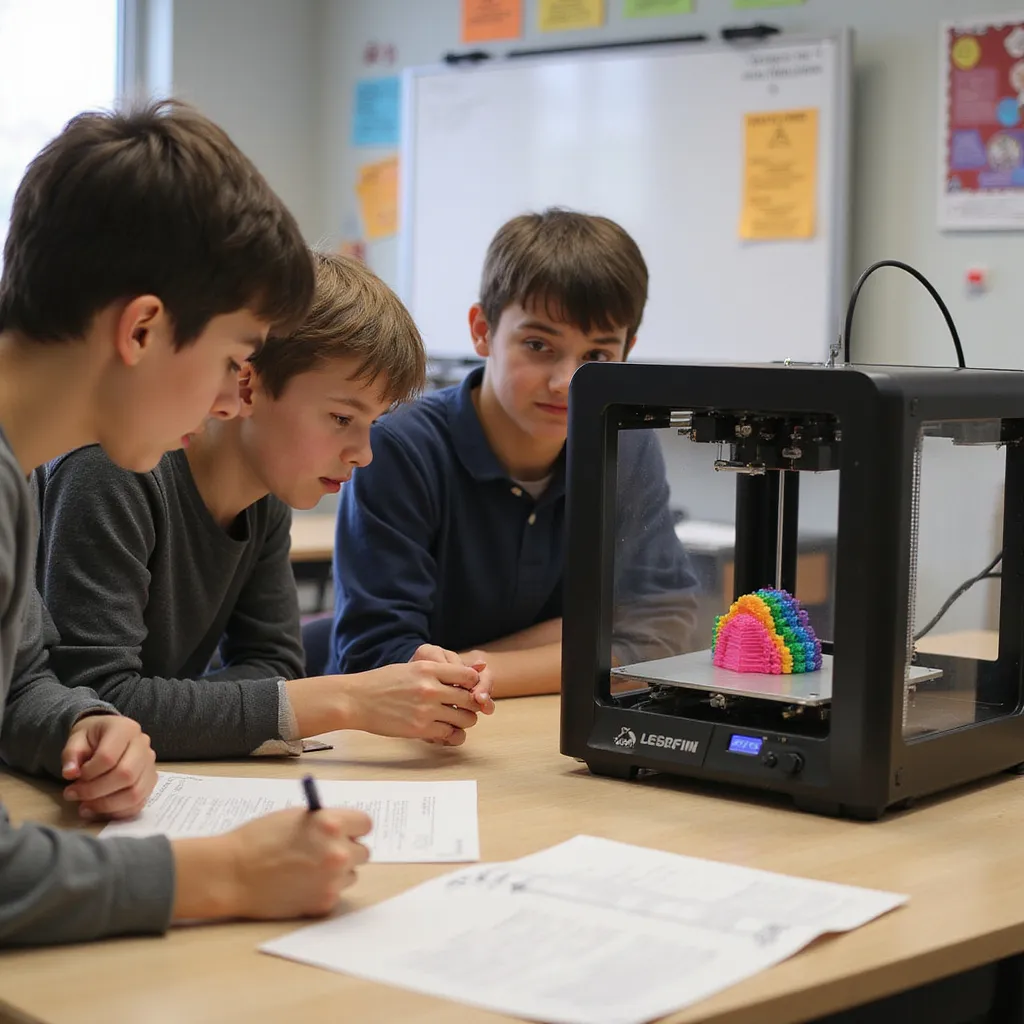
Administrators value the measurable outcomes. Higher student engagement, stronger STEM participation, and improved problem solving skills show clear instructional ROI. Procurement teams benefit from durable hardware, predictable operating costs, and long term classroom value.
Scalability is key for districts. Choose platforms that grow from single classrooms to district wide programs with centralized management, student accounts, and fleet monitoring. This protects your investment and supports long term adoption.
If you want to modernize learning, boost STEM outcomes, and prepare students for real careers, 3D printers for education are a proven investment. Choose an education focused solution with training, curriculum, and long term support. This ensures fast adoption, measurable results, and lasting value for your district.
3D Printers for Education: How to Choose, Implement, and Scale Impact Across Your District
3D printers for education are only valuable when teachers and students actually use them. The right education 3D printers deliver hands-on learning, rapid prototyping, and engaging STEM projects across classrooms, libraries, and CTE labs. Start with clear goals, safe enclosed systems, reliable filament, and intuitive software. Launch a supported pilot, then scale multiple machines with training and replacement parts. Request a quote for a tailored district wide 3D printing in education plan.
Why 3D printers for education are becoming essential in modern K 12 learning
Walk into a modern classroom and you see a shift. Students are not just consuming information. They are building, testing, and improving ideas. That is why 3D printers for education are moving from nice to have to a practical tool schools budget for. When a concept is hard to visualize on a screen, a physical model makes learning click faster for more learning styles.
For administrators, the value is clear. You get higher engagement, stronger STEM outcomes, and more authentic assessment without adding a new elective or rewriting curriculum. Today’s education 3D printers fit on a desktop, use common PLA filament, and pair with classroom friendly software and lesson plans. Many schools start with one printer in a library or lab, then scale to multiple machines once teachers and students see results.
There is also a timing factor. Grants and funding cycles move fast, and districts that plan early tend to secure better pricing, service plans, and professional development. If you are weighing adoption, start by mapping one grade level project to a real standard and a real deliverable students can print.
What problems do 3D printers for education actually solve in classrooms
Most schools do not struggle with ideas. They struggle with time, attention, and making abstract standards feel real. 3D printers for education solve that by turning lessons into tangible outputs students can hold, measure, and improve. When students design a part, slice it, and watch it print layer by layer, learning becomes concrete and memorable.
Teachers also face a practical problem. They need durable, accurate manipulatives and models that fit exact lessons. With educational 3D printers, you can print custom geometry, scientific models, and prototypes for engineering and art projects on demand. This reduces delays and keeps projects moving forward.
From passive to hands on learning boosting engagement and retention with 3D printing
Hands on learning changes how students interact with content. Instead of memorizing facts, students design, test, and refine physical objects. This process improves retention, increases participation, and supports different learning styles. 3D printing turns abstract lessons into interactive experiences students remember long after class ends.
Supporting STEM, CTE, and makerspace programs with authentic problem based projects
STEM and CTE programs thrive when students solve real problems. 3D printers allow learners to prototype tools, parts, and models tied to real world challenges. Makerspaces benefit from rapid iteration, letting students improve designs quickly while practicing engineering thinking, collaboration, and applied technical skills.
Reducing long term costs with in house prototypes, manipulatives, and classroom resources
Schools reduce ongoing costs by producing learning materials in house. Instead of ordering replacement parts or specialty models, teachers can print what they need. This lowers procurement delays, supports customization for lessons, and builds a sustainable system for classroom resources over time.
How 3D printers for education support future ready skills and career pathways
3D printing helps students develop skills aligned with modern careers. Learners practice design thinking, digital modeling, and technical problem solving. These skills connect directly to engineering, manufacturing, healthcare, architecture, and creative industries where rapid prototyping and iteration are essential.
Building critical thinking, design thinking, and problem solving skills
Students learn to define problems, create solutions, test outcomes, and improve designs. This structured process strengthens critical thinking and persistence. 3D printing makes iteration visible and teaches students that failure is part of learning, which builds confidence and resilience.
Connecting 3D printing to STEM careers, CTE pathways, and industry certifications
Exposure to 3D printing introduces students to tools used in professional environments. Projects align with CTE pathways and prepare learners for industry certifications. This early experience helps students explore careers and build portfolios that demonstrate practical skills to future employers.
Key benefits of 3D printers for education for district leaders, teachers, and students
3D printers for education turn hands-on learning into a repeatable system across classrooms, schools, and grade levels. Instead of one off makerspace moments, students practice design thinking, 3D modeling, and problem solving, then hold the result in their hands.
For district leaders, education 3D printers support measurable outcomes like stronger STEM engagement and visible community wins. For teachers, educational 3D printers make abstract concepts concrete. For students, it builds confidence through real projects they design, print, and present.
Standardized hardware and software improve reliability. Preset slicer profiles, enclosed build areas, and consistent materials reduce troubleshooting. This keeps classrooms focused on learning outcomes rather than technical issues.
How superintendents and district leadership see impact from 3D printing programs
District leaders value programs that show measurable results. 3D printing supports engagement metrics, project based learning outcomes, and community visibility. Showcasing student projects at board meetings and events demonstrates innovation and responsible technology investment.
Aligning 3D printers with strategic plans, ESSER, and long term technology roadmaps
Successful programs align 3D printing with district priorities. Leaders connect printers to long term technology plans, funding strategies, and academic goals. This ensures investments support sustainable growth rather than one time pilot projects that fade after initial excitement.
Using 3D printing success stories to showcase innovation to boards and communities
Student projects provide tangible proof of impact. Sharing success stories builds community support and strengthens future funding proposals. Visible outcomes help decision makers justify investments and demonstrate how technology improves learning experiences across schools.
What curriculum directors, STEM educators, and art teachers gain from 3D printers
Educators gain flexible tools to bring lessons to life. 3D printers support cross subject projects in math, science, art, and CTE. Teachers design custom models that match learning goals and adapt projects for diverse student needs.
Embedding 3D printing projects into math, science, CTE, and arts standards
Projects align with standards when teachers design activities around required outcomes. Geometry models, scientific simulations, and design challenges support curriculum goals while adding creativity and engagement to daily instruction.
Differentiation, accessibility, and supporting diverse learners with tangible models
Tangible models help students who struggle with abstract concepts. 3D printing supports differentiated instruction by offering visual and physical learning tools. This improves accessibility and helps more learners succeed.
How to choose the right 3D printers for education for your schools and programs
Buying 3D printers for education is about daily classroom reality. Start with learning goals and classroom use cases. Standardize on a small set of printers so training, supplies, and support scale efficiently. Plan for software, storage, and maintenance.
Total cost of ownership matters more than initial price. Reliable printers with service plans and predictable supplies reduce downtime and frustration. Budget for filament, build plates, and staff training to ensure long term success.
What to look for in 3D printers for education safety, reliability, and ease of use
Classroom printers should be stable, enclosed, and simple to operate. Features like auto bed leveling, guided filament loading, and clear touchscreens reduce setup time. Reliable printers minimize interruptions and help teachers stay focused on instruction.
Safety features that matter in K 12 enclosures, filtration, and classroom ready materials
Safety starts with enclosed designs and filtration. Classroom ready materials like PLA reduce fumes and risks. Clear placement guidelines and supervision practices help maintain a safe environment for students and staff.
Reliability, maintenance, and total cost of ownership for school 3D printers
Reliable printers save time and money. Predictable maintenance schedules, available replacement parts, and strong vendor support reduce downtime. This keeps programs running smoothly and ensures consistent classroom use.
Matching 3D printer types, build volumes, and materials to grade levels and use cases
Different grade levels need different capabilities. Smaller printers suit elementary projects, while larger build volumes support advanced engineering work. Matching materials and printer types to use cases ensures safe, effective implementation.
Entry level 3D printers for elementary makerspaces and introductory STEM
Entry level printers should be easy to use and safe. Simple interfaces and preset profiles help younger students focus on creativity and basic design skills without complex setup requirements.
Advanced 3D printing solutions for middle and high school engineering and CTE labs
Advanced programs benefit from larger build volumes and expanded material options. These tools support prototyping, mechanical design, and technical skill development aligned with career pathways.
Planning a successful 3D printers for education rollout across your district
A successful rollout starts with clear goals and phased implementation. Pilot programs validate workflows and identify training needs. Standardize safety guidelines, materials, and software to ensure consistency across schools.
Budget for ongoing support, consumables, and professional development. A system approach reduces printer downtime and keeps teachers engaged. Clear processes help districts scale programs confidently.
3d printer 3d educational printers 3d education printers 3d printer clay 3d education printers formlabs 3d education printers 3d printers 3d printer 3d education printers 3d printing 3d education printers 3d printing 3d educational printers curriculum 3d printing 3d education printers 3d printers 3d printers 3d educational printers 3d printing 3d printers 3d printer 3d printers 3d printers 3d education printers 3d printer formlabs 3d printing calibration 3d printers 3d printer dlp metal 3d printer 3d educational printers resin 3d printers formlabs 3d educational printers mjf 3d printer 3d printers 3d printer 3d printers formlabs resin software 3d printers multi jet fusion touchscreen 3d printers abs silicone 3d education printers additive manufacturing 3d printing 3d printers 3d printing 3d printing resin formlabs 3d printing 3d printing 3d printing 3d education printers multi jet fusion 3d printers 3d printing 3d printers software 3d printing 3d printers 3d education printers 3d printer 3d printers 3d printing 3d printer 3d education printers 3d printing small package 3d printing 3d education printers 3d education printers 3d printing training 3d printing 3d printer resin 3d printing resin 3d education printers 3d printers 3d education printers 3d printing metal calibration 3d printing metal curriculum 3d printers formlabs 3d educational printers ceramic 3d education printers mjf 3d educational printers touchscreen 3d printers 3d educational printers training 3d printer